
DIA represents the expected resistance of an animal’s offspring to calfhood diarrhea in a herd with average management conditions. Larger, positive values are more favorable, indicating greater resistance.
Photo: World Wide Sires
Diarrhea (DIA)
Available for Holsteins and Jerseys, DIA predicts the expected resistance of an animal’s offspring to calfhood diarrhea.
Benefits of Trait
Introduced in August 2026, DIA represents the expected resistance of an animal’s offspring to calfhood diarrhea.
- Raising replacement heifers is among the most costly aspects of dairy production, second only to feed expenses, and these costs are further increased by the occurrence of disease.
- Diarrhea is one of the two most common causes of dairy heifer mortality.
- Health challenges experienced early in life can have lasting effects on a dairy animal’s productivity, livability, and health later in life.
Resistance to Diarrhea Trait
Evaluations are expressed in percentage points of resistance above or below the breed average. Larger, positive values are more favorable, indicating greater resistance.
DIA is currently available for Holsteins and Jerseys. As more data become available, evaluations will be provided for additional breeds.
DIA will not be incorporated into the lifetime merit indexes at its launch. It is expected to be added at the next merit index revision.
DIA heritability is estimated at 2.6% (observed scale), similar to the heritability of cow health traits.
Holsteins: Young genomic bulls are expected to have reliabilities averaging 43%. Progeny-tested bulls are expected to have genomic reliabilities averaging 48%.
Jerseys: Young genomic bulls are expected to have reliabilities averaging 33%. Progeny-tested bulls are expected to have genomic reliabilities averaging 36%.
As additional data are accumulated for both breeds, reliabilities will increase.
The PTA correlation between DIA and RSP was estimated to be 0.34. The correlation of DIA with Heifer Livability was found to be 0.23.
PTA correlations of DIA and RSP with other traits currently under selection were negligible, with the exception of small favorable correlations between both DIA and RSP with Cow Livability.
DIA and RSP calf health evaluations were developed using producer-recorded data available in the National Cooperator Database. Extensive data quality control measures, similar to those used for cow health traits, were developed and implemented to ensure only the most reliable data were included for evaluation. The edited data included over 263,000 DIA records.
Holsteins: The standard deviation (variation) for DIA PTAs in Holstein bulls is 1.3 percentage points. Because one and two standard deviations normally include 68% and 95% of observations, respectively, we assume about 68% of Holstein bulls will have a DIA PTA between -1.3 to +1.3 percentage points while 95% of Holstein bulls will range from -2.6 to +2.6 percentage points.
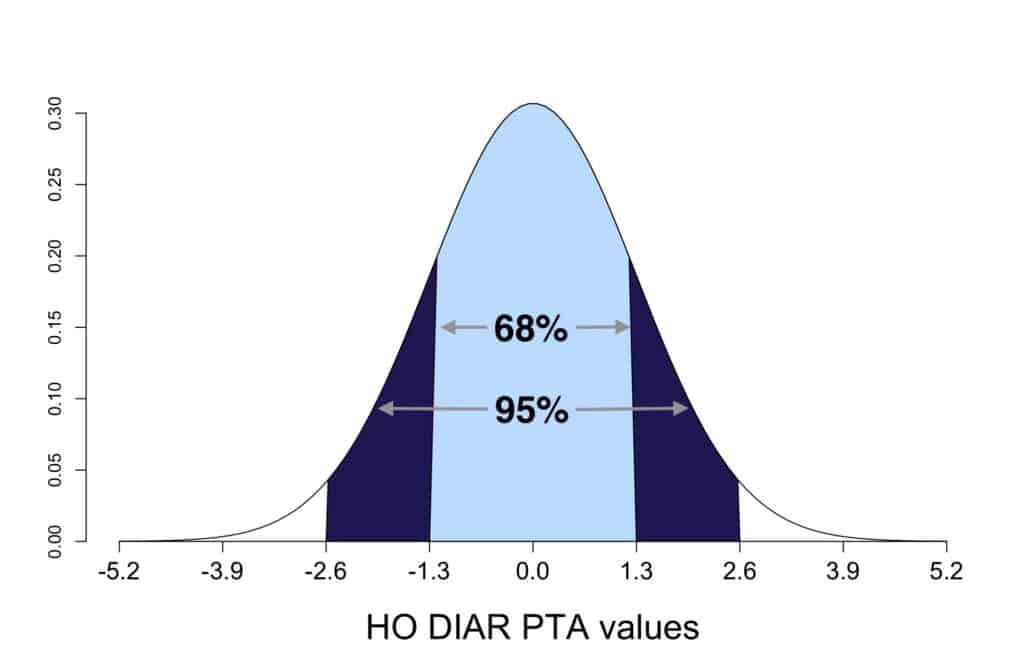
In testing of evaluated Holstein bulls born since 2000 with reliabilities of at least 80%, DIA PTAs ranged from -4.4 percentage points to +3.0 percentage points.
Pre-release analysis indicated that active A.I. Holstein sires in December 2025 (697 bulls) ranged from -5.3 percentage points to +2.4 percentage points for DIA, with the average at approximately -0.19.
Jerseys: The standard deviation for DIA PTAs in Jersey bulls is 2.0 percentage points. We assume about 68% of Jersey bulls will have a DIA PTA between -2.0 to +2.0 percentage points, while 95% of Jersey bulls will range from approximately -4.0 to +4.0 percentage points.
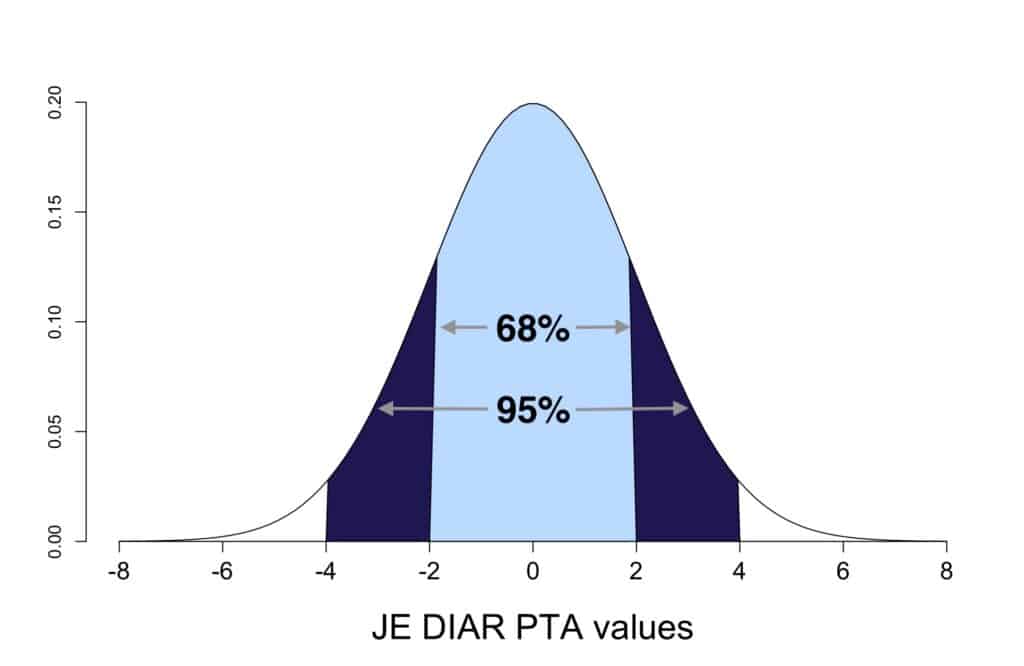
In testing of evaluated Jersey bulls born since 2000 with reliabilities of at least 80%, DIA PTAs ranged from -4.2 percentage points to +3.8 percentage points.
Pre-release analysis indicated that active A.I. Jersey sires in December 2025 (123 bulls) ranged from -6.8 percentage points to +3.5 percentage points for DIA, with the average at approximately -0.14.
Future Development
Future work will focus on evaluating the potential advantages of a multi-trait approach that jointly analyzes calf health-related traits.
Related Publications
Improving dairy calf health through inclusion of diarrhea and respiratory health data into a US national genetic evaluation. Neupane et al, 2025.
Implementation of a national genetic evaluation for calf health traits in the US. Neupane et al, 2026.
Information last updated April 22, 2026.